
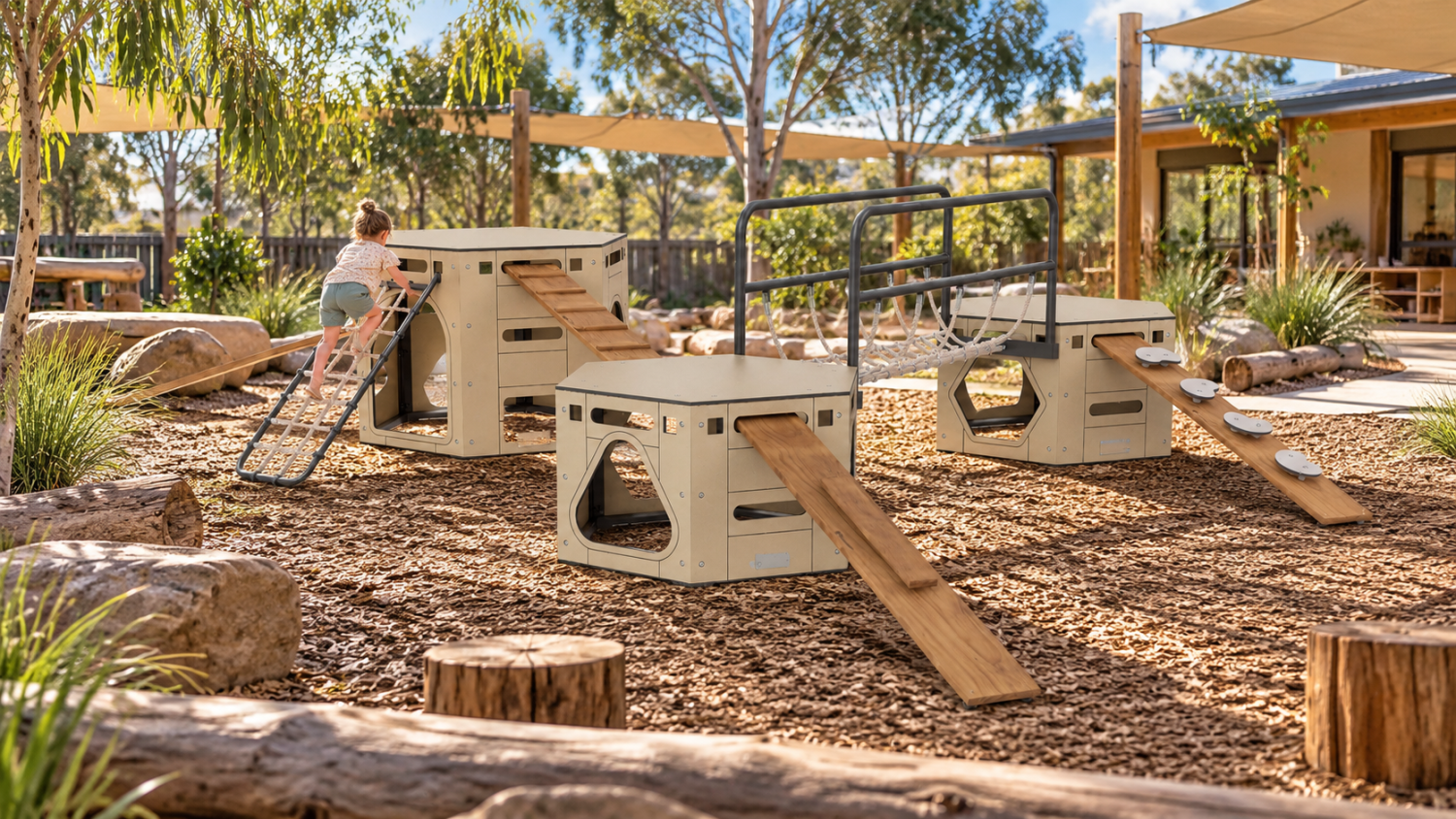
The outdoor environment is one of the most powerful teachers in any early learning service. Under the National Quality Framework, it sits at the heart of Quality Area 3 – Physical environment of the National Quality Standard (NQS), and it is where many of the Early Years Learning Framework (EYLF V2.0) outcomes come to life every day.
The good news? Strengthening your outdoor learning environment doesn’t have to start with a full yard redevelopment. Below are eight simple, practical steps Australian services can take – most of them low or no cost – along with how Outdorable equipment has been intentionally designed to support each one.
Quality Area 3 has two standards and five elements:
To move from Meeting to Exceeding, ACECQA’s guidance looks for three themes across your practice: it is embedded in everyday service operations, informed by critical reflection, and shaped by meaningful engagement with families and community. Equipment alone never earns a rating – but a thoughtfully designed, flexible environment makes great practice far easier to deliver and to evidence.
Get down to child height and walk your outdoor space. Where can children climb, hide, balance, dig, rest or be loud? Where is there nothing to do? Ask the children too – their ideas are evidence of child voice and agency (EYLF Outcome 1). Record what you find; this becomes the starting point for your Quality Improvement Plan (QIP).
How Outdorable fits: our modular climbers and planks can be rearranged in minutes, so the gaps you identify can be filled by reconfiguring – not replacing – your equipment.
Every child should be able to find a challenge that is just right for them. Provide a range of heights, surfaces and difficulty levels so a first-time climber and a confident four-year-old can play side by side. This supports EYLF Outcome 3 (a strong sense of wellbeing) and element 3.2.1 (an inclusive environment).
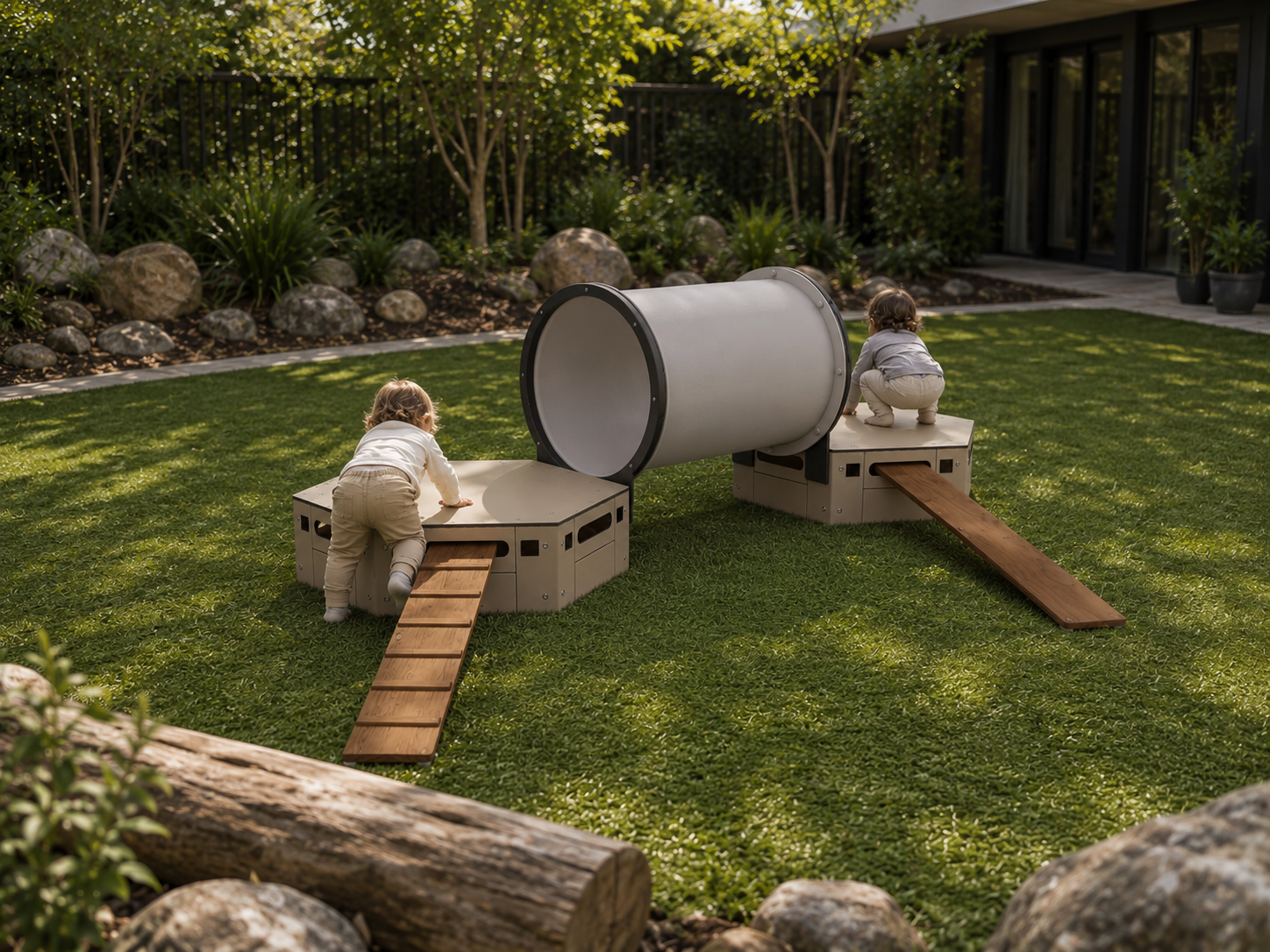
How Outdorable fits: climbers come in three heights – 300mm, 600mm and 860mm – with ramps, ladders, wobbly logs, river rocks, nets and bridges that step up the challenge gradually. Equipment under 600mm can be used on most surfaces without extra softfall, making it easy to create dedicated zones for babies and toddlers.
A yard that looks exactly the same in March and November is a missed opportunity. Plan regular resets based on your observations and children’s emerging interests, and document why you made each change. This is the kind of critically reflective practice that underpins Exceeding ratings.
How Outdorable fits: there are hundreds of ways to configure our Premium Accoya and HIVE ranges. Invite children to help design the next layout – it builds ownership, collaboration and problem solving (EYLF Outcome 4).
Element 3.2.2 asks that resources allow for multiple uses, are sufficient in number and enable every child to engage. A plank can be a ramp, a balance beam, a ball run or a pirate’s gangplank. Loose parts, crates, rope and fabric extend this even further.
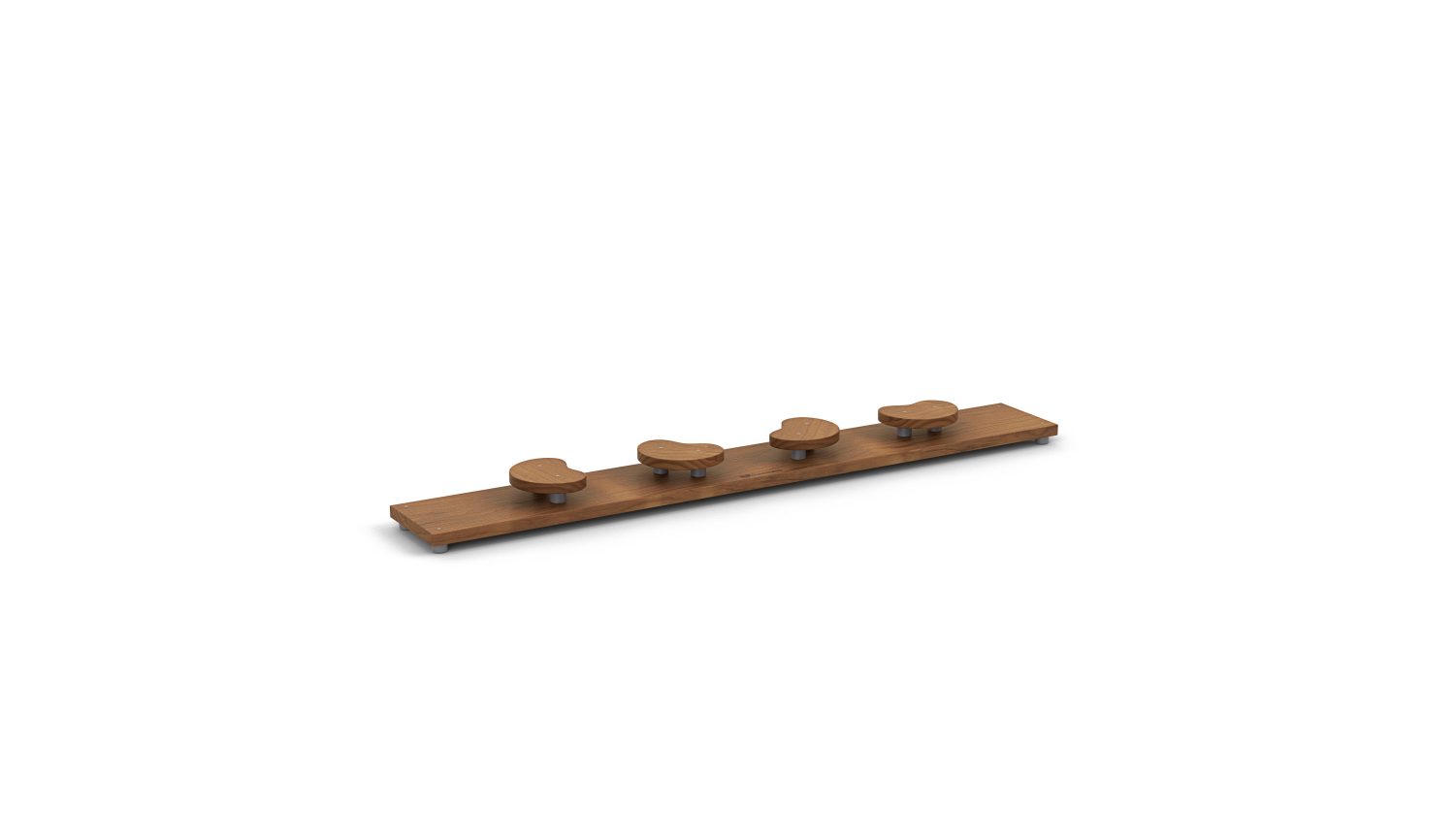
How Outdorable fits: every challenge plank works on a climber or flat on the ground, and our Premium Accoya timber attachments fit both the Accoya and HIVE climbers. Our Loose Parts Ball Run packages add hundreds more open-ended possibilities.
Regulation 113 requires outdoor spaces to allow children to explore and experience the natural environment, and element 3.2.1 refers to quality experiences in both built and natural environments. Add plants, logs, stones, sand, water and mud. Grow a garden. Learn the local Aboriginal and Torres Strait Islander names for plants, animals and places with guidance from your local community.
Water and mud are two of the simplest, richest natural materials you can offer. Children pump, pour, dam and redirect water, discovering cause and effect, volume and flow. In the sandpit, mud and sand become pizzas, damper and barbecue snags – sparking cooperative role play, turn-taking and conversation.
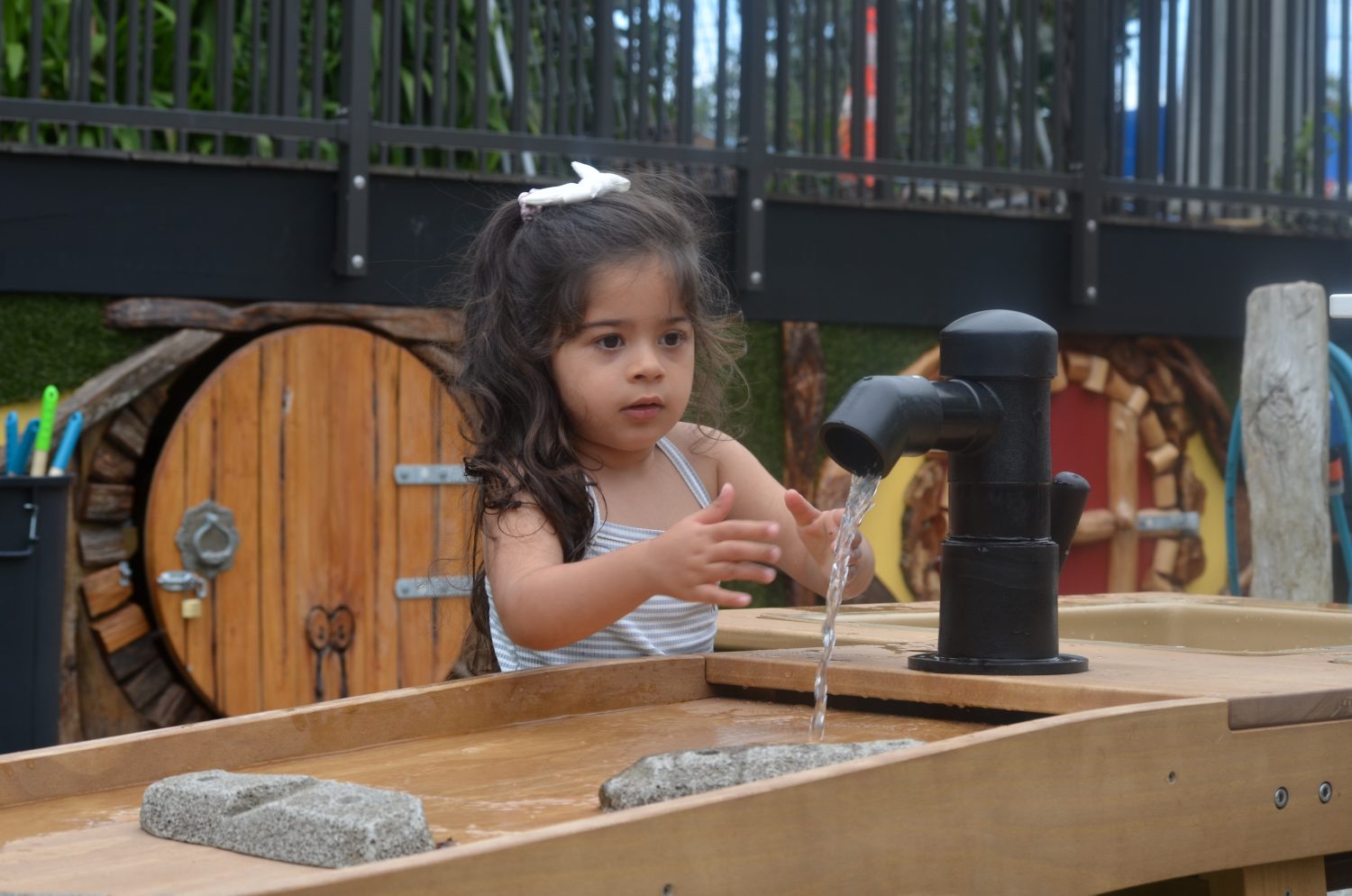
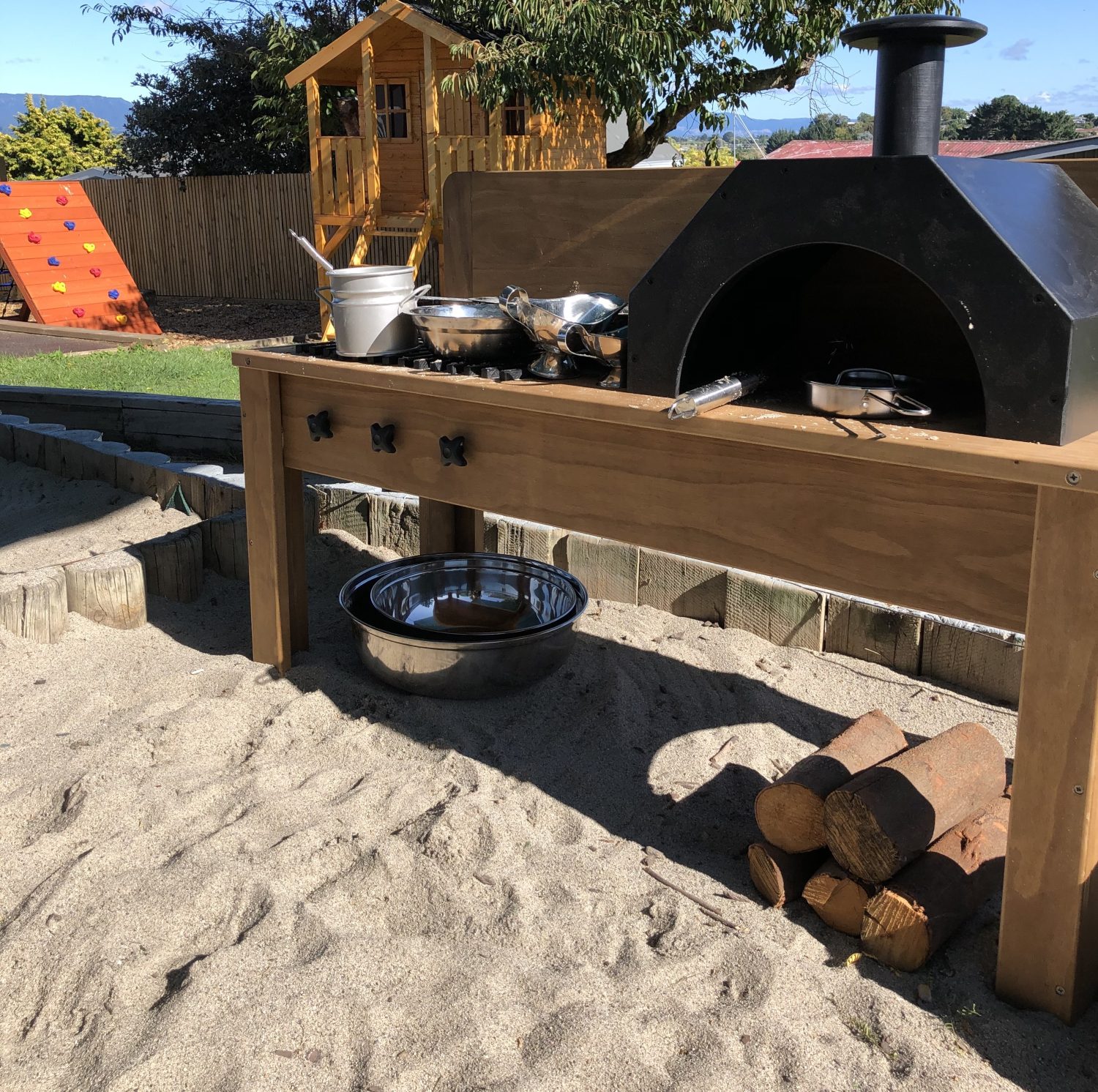
How Outdorable fits: our designs are inspired by nature – river rocks, wobbly logs, lily pads across the billabong – and our water play and mud play ranges bring water and mud into the yard in a way that’s easy to supervise, easy to hose clean and built to stay outdoors all year. Connect the Riverbed Table to a rainwater tank and it doubles as a conversation about saving water (element 3.2.3).
Element 3.2.3 and the EYLF V2.0 principle of sustainability ask services to care for the environment and help children become environmentally responsible. Simple steps include worm farms, compost, rainwater collection for water play, recycling and talking with children about why you choose the materials you do.
How Outdorable fits: our Premium Accoya timber is FSC-certified, non-toxic and engineered to last 25+ years outdoors – reducing waste and replacement over the life of your service. It’s a great story to share with children and families.
Element 3.1.2 is often where services slip. Build a simple daily outdoor safety check, a termly maintenance schedule and a record of repairs. Check softfall depth and coverage around anything over 600mm high, in line with AS 4422.
How Outdorable fits: Accoya is rated Class 1 for durability and resists rot, swelling and insect attack, while HIVE’s HDPE and aluminium won’t rust, rot or splinter and simply hose clean. Less maintenance means more time for teaching.
Meaningful engagement with families is one of the three Exceeding themes. Share photos and learning stories from outdoor play, invite families to a working bee, ask for donations of natural loose parts, and seek their ideas when planning yard changes.
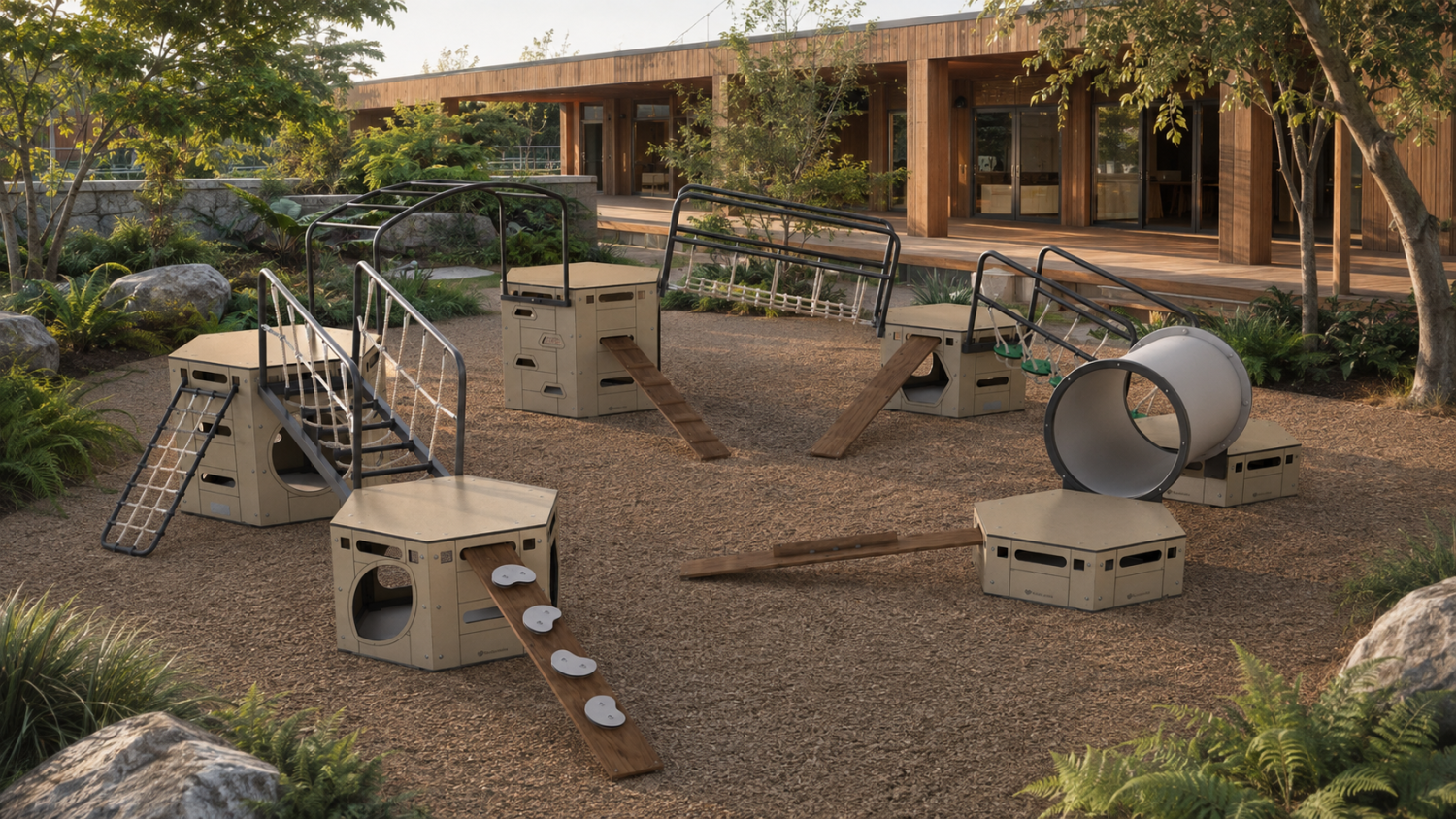
How Outdorable fits: because our equipment is freestanding and modular, a family working bee can help set up a brand-new layout in an afternoon – and the children can show their families what they designed.
Outdorable has been pioneering modular play in Australia for over 10 years. Every piece in our HIVE range and Premium Accoya play packages is designed to be flexible, durable and purposeful – so your outdoor environment can grow with your children, your program and your QIP.
Planning your next outdoor upgrade? Explore the range or contact our team for help choosing the right package for your service and your yard.
This article is general guidance only. For the full requirements, refer to ACECQA’s Guide to the National Quality Framework and the Early Years Learning Framework V2.0.